
Time: 11:00 am – 12:00 pm, 9th September 2025
Overview of the Seminar:
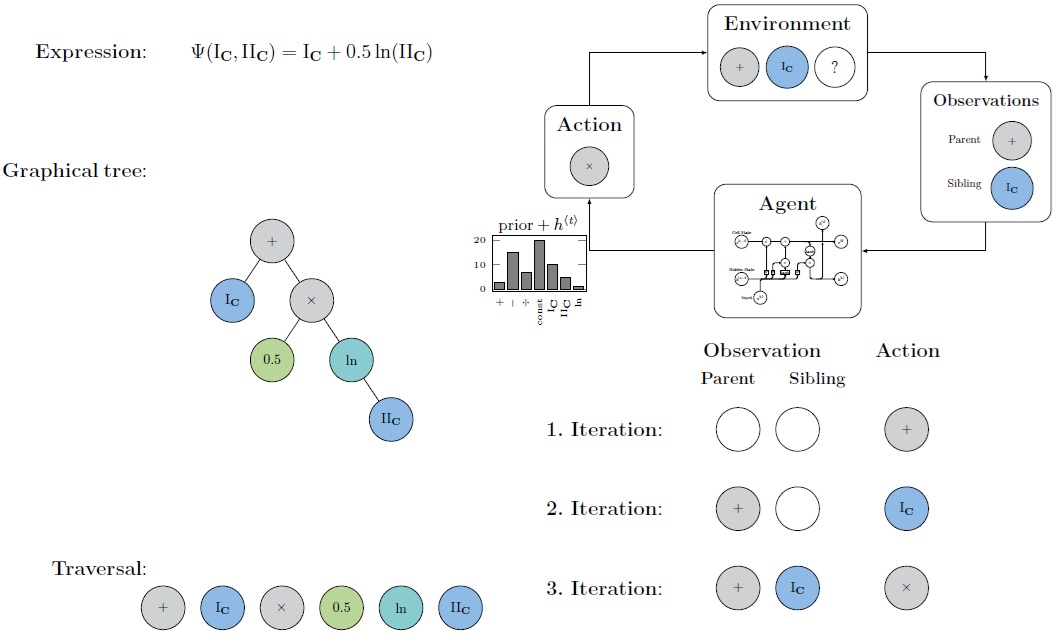
Symbolic regression represents an interesting method of machine learning which allows an unbiased, automated generation of constitutive models for various materials. In comparison to other data-driven methods, symbolic regression reproduces a mathematical expression (for example, of a strain energy or damage function) which can be analysed, interpreted, and easily implemented into a finite element code. In this contribution, we first apply symbolic regression to the modelling of soft materials. They are usually subject to large deformations, demonstrating inelastic and often anisotropic response, which makes their constitutive modelling very challenging. For a long time, it was driven mainly by expert knowledge, whereas attention was focused in particular on elastomers, biological tissues and fabrics. We present some applications demonstrating how effective symbolic regression can be, for example, in modelling the elastic and inelastic response of elastomers. The proposed procedure also grants new insights into many established and well-known material models. Further, deep symbolic regression was applied to describe microstructure property relations of aerogels, which represent very light porous materials with exceptional thermal and acoustic isolation properties. Finally, we show that deep symbolic regression enables calculating isotropic tensor functions in terms of the principal invariants of the argument tensor even without computing its eigenvalues. The presented results demonstrate the large potential of deep symbolic regression for various applications in continuum mechanics and especially in constitutive modelling of materials.
For more information, contact: Prof. Antonio J. Gil

Prof. Itskov studied Automotive Engineering at the Moscow State Automobile and Road Technical University, Russia. He received his doctoral degree in mechanics in 1990 and his habilitation in mechanics from the University of Bayreuth, Germany, in 2002. Since 2004, he has been a full professor of Continuum Mechanics at RWTH Aachen University, Germany. He has authored more than 100 papers and book chapters, and his textbooks on tensor algebra and tensor analysis for engineers have been widely acclaimed by over 15 generations of students and researchers in continuum mechanics. His research interests include tensor analysis, nonlinear continuum mechanics, particularly its applications to anisotropic materials, the mechanics of elastomers and soft tissues, and the integration of machine learning into constitutive modelling.
Location: Computational Foundry (Bay Campus), Robert Recorde Room (102)
Speakers: Prof. Mikhail Itskov, Department of Continuum Mechanics, RWTH Aachen University, Aachen, Germany