
Time: 14:00-15:00, 18 November 2026
Overview of the Event:
Soft robots, composed primarily of compliant materials, can achieve highly adaptive and robust motions that are difficult to realize with conventional rigid robotic systems. However, their design and control remain challenging because of strong geometric and material nonlinearities, complex interactions with surrounding environments, and the high computational cost of conventional simulation methods. This seminar will introduce a computational framework based on discrete differential geometry (DDG) for efficient dynamic simulation, design, and control of soft robotic systems. Particular attention will be given to three key challenges: modeling nonlinear structural dynamics, capturing interactions with complex environments, and achieving computational efficiency suitable for real-time applications. The framework will be demonstrated through a range of robotic systems, including shape-memory-alloy-actuated soft robots, flagella-inspired robots, magnetic cilia robots, snap-jump robots, and tether-net systems for space applications. These examples illustrate how physics-based simulation can be integrated with computational design and control to predict complex robot dynamics, optimize morphology and actuation, and enable online control. The computationally efficient and robust numerical tools presented in this seminar provide a bridge between high-fidelity mechanics modeling and real-time robotic applications, offering a general framework for accelerating the design, simulation, and control of next-generation soft and flexible robotic systems operating in complex and dynamic environments.
Location: The College, Room: 019 (Bay Campus)
List of Participants: PGR students, Academic staff
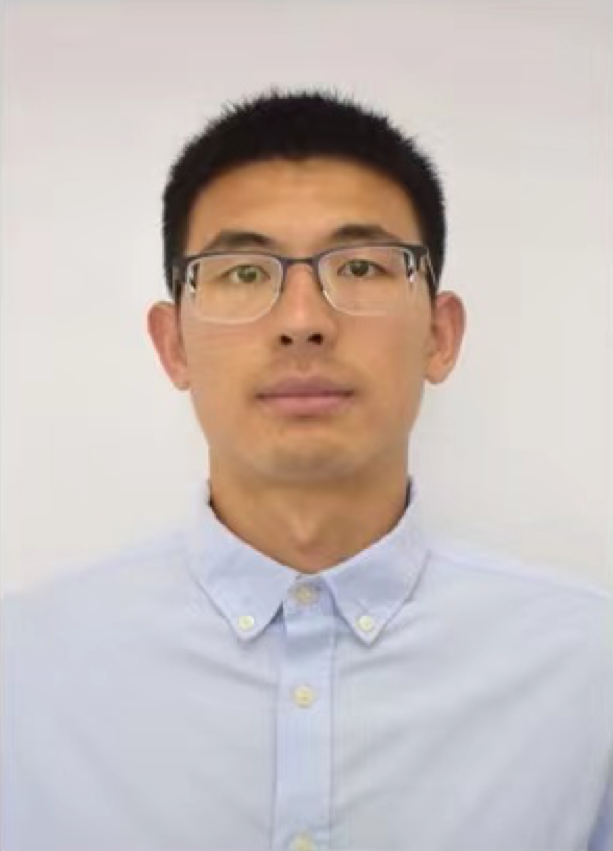
Speakers: Dr. Weicheng Huan, School of Engineering, Newcastle University, Lecturer
Dr. Weicheng Huang is a Lecturer in Mechanics and Robotics in the School of Engineering at Newcastle University, UK. He received his B.Eng. degree in Engineering Mechanics from Tongji University, China, in 2017 and his Ph.D. degree in Mechanical Engineering from the University of California, Los Angeles (UCLA), USA, in 2021. Before joining Newcastle University, he was an Associate Professor at Southeast University, China, from 2021 to 2023. His research lies at the intersection of computational mechanics, robotics, and intelligent engineering, with a particular focus on developing efficient physics-based computational methods for the modeling, simulation, design, and control of flexible structures and soft robotic systems. His research spans soft and continuum robotics, programmable structures, flexible electronics, deployable space systems, and nonlinear dynamics. A central theme of his work is the development of discrete differential geometry–based computational frameworks that combine high-fidelity mechanics with computational efficiency, enabling both complex multiphysics simulation and real-time robotic control. He is also interested in integrating mechanics-based modeling with optimization, machine learning, and autonomous control to accelerate the design and operation of intelligent robotic systems. Dr. Huang has published more than 60 papers in leading journals, including Applied Mechanics Reviews, Nature Communications, Science Advances, Matter, Physical Review Letters, Journal of the Mechanics and Physics of Solids, Computer Methods in Applied Mechanics and Engineering, and The International Journal of Robotics Research. He also serves on the Early Career Editorial Boards of Extreme Mechanics Letters and Soft Science.
Contact Information: Prof Mokarram Hossain, mokarram.hossain@swansea.ac.uk