-
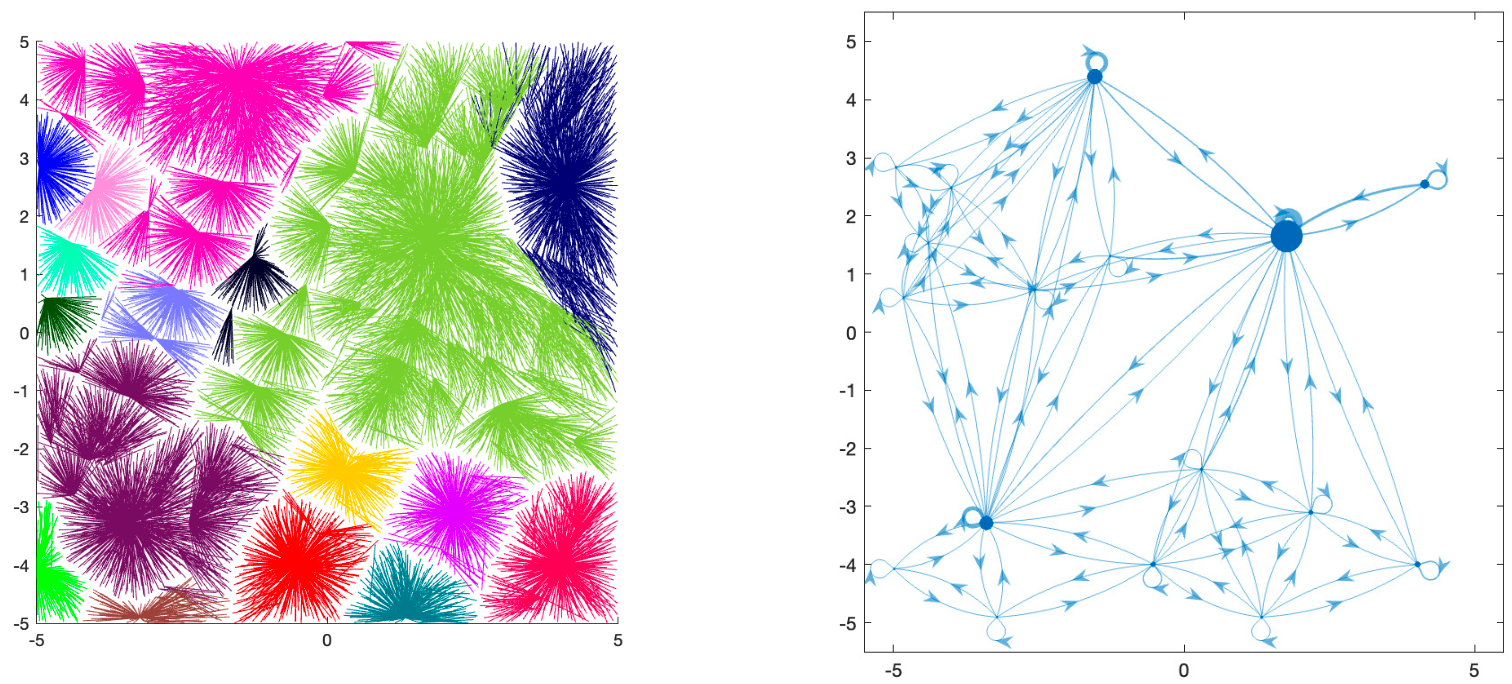
Characterising Optimisation Landscapes via Trees and Networks
Speaker: Jonathan Fieldsend is Professor of Computational Intelligence in the Department of Computer Science at the University of Exeter. His work primarily sits at the interface of optimisation and machine learning, where he develops methods and algorithms for the optimisation of industrial problems, typically with multiple objectives. Jonathan is currently an Associate Editor of the…
-
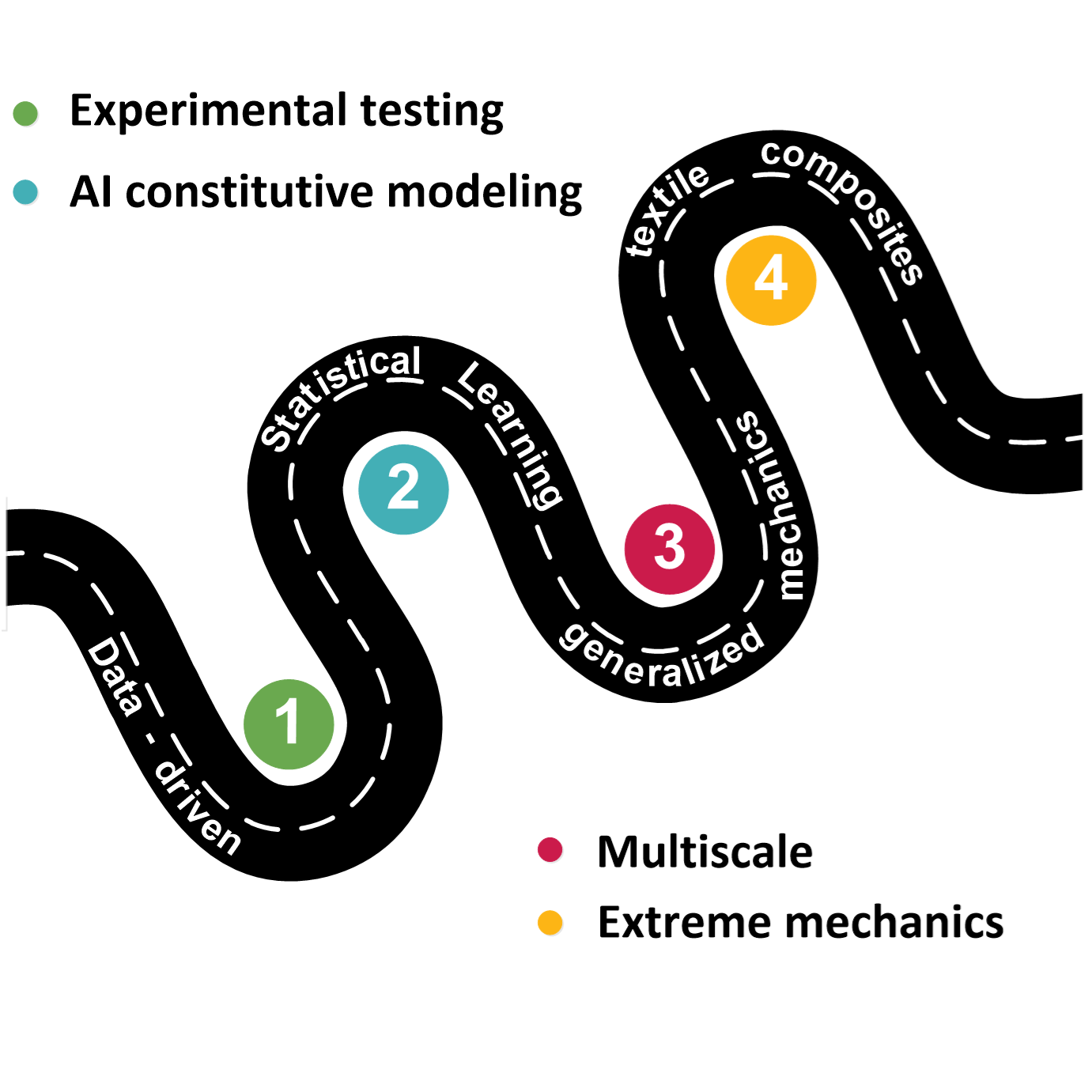
DSLgene: Data-driven Statistical Learning of generalised mechanics of textile composites (funded by the Royal Society, Project number NIF\R1\241753)
Project Overview In this project, we aim to revolutionise the current artificial intelligence modelling approaches of textile reinforcements by integrating machine learning with the extensive wealth of physics knowledge. This facilitates the development of robust material models of textile reinforcements with unparalleled reliability (in terms of extrapolatability), thereby enabling the prediction of unseen scenarios with…
-
Collaborative and Creative Engagements with AI
Speaker: Dr Mirowski’s research spans reinforcement learning, navigation, weather and climate forecasting, and socio-technical systems for human-machine collaboration. He is the author of over 80 papers and patents applying AI to real-world challenges. A trained actor, he also founded and directs Improbotics, a theatre company where humans and AI-powered robots co-create live improvised performances. He…
-

MadeAI2025: The 2nd International Conference of Modelling, Data Analytics and AI in Engineering
Conference Introduction: This event serves as a dynamic platform for the exchange of ground breaking ideas and insights. Delve into the powerful synergy of modelling, data analytics, and AI in engineering, uncovering new opportunities to advance innovation and solve complex challenges. The conference is dedicated to driving research and fostering transformative breakthroughs in these fields,…
-

Computational Methods for Multiscale, Multiuncertainty and Multiphysics Problems
Conference Introduction: Over the past two decades, research in multi-physics, multi-scale, and multi-uncertainty modeling has grown significantly, driven by advances in mathematical methods, numerical strategies, and computational power. This field integrates homogenization, parallel computing, and stochastic analysis, with applications ranging from materials science to biomedical engineering. The CM3P(Computational Methods for Multiscale, Multi-uncertainty and Multi-physics Problems)…
-
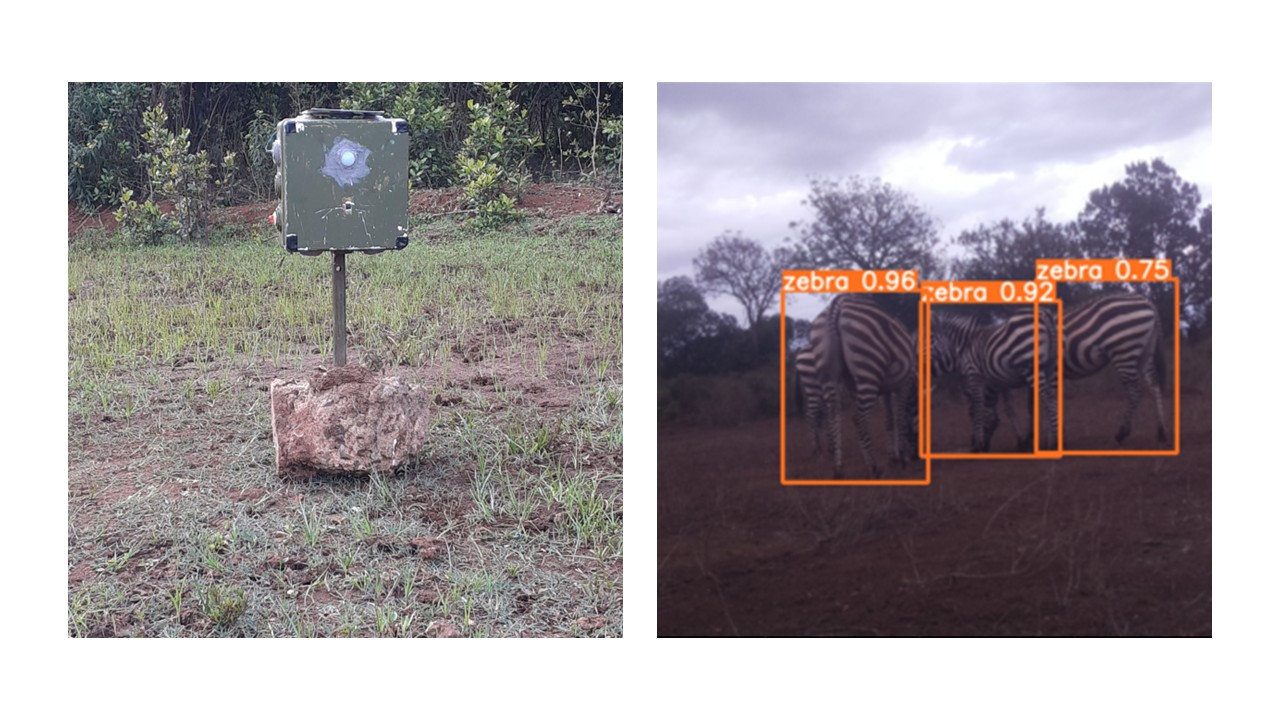
Exploration of machine learning in camera trapping and bioacoustics
Speaker: Time: 13:00–14:00, 8th July 2025 Location/Room: Zoology Museum, Wallace Building, Singleton Campus Contact Information: Andrew King (a.j.king@swansea.ac.uk) Camera trapping and bioacoustics are both methods of monitoring wildlife ecosystems. They both involve hardware and software development, data collection, data analysis and drawing of insights. In this seminar, we will look at how we designed and implemented low-cost…
-
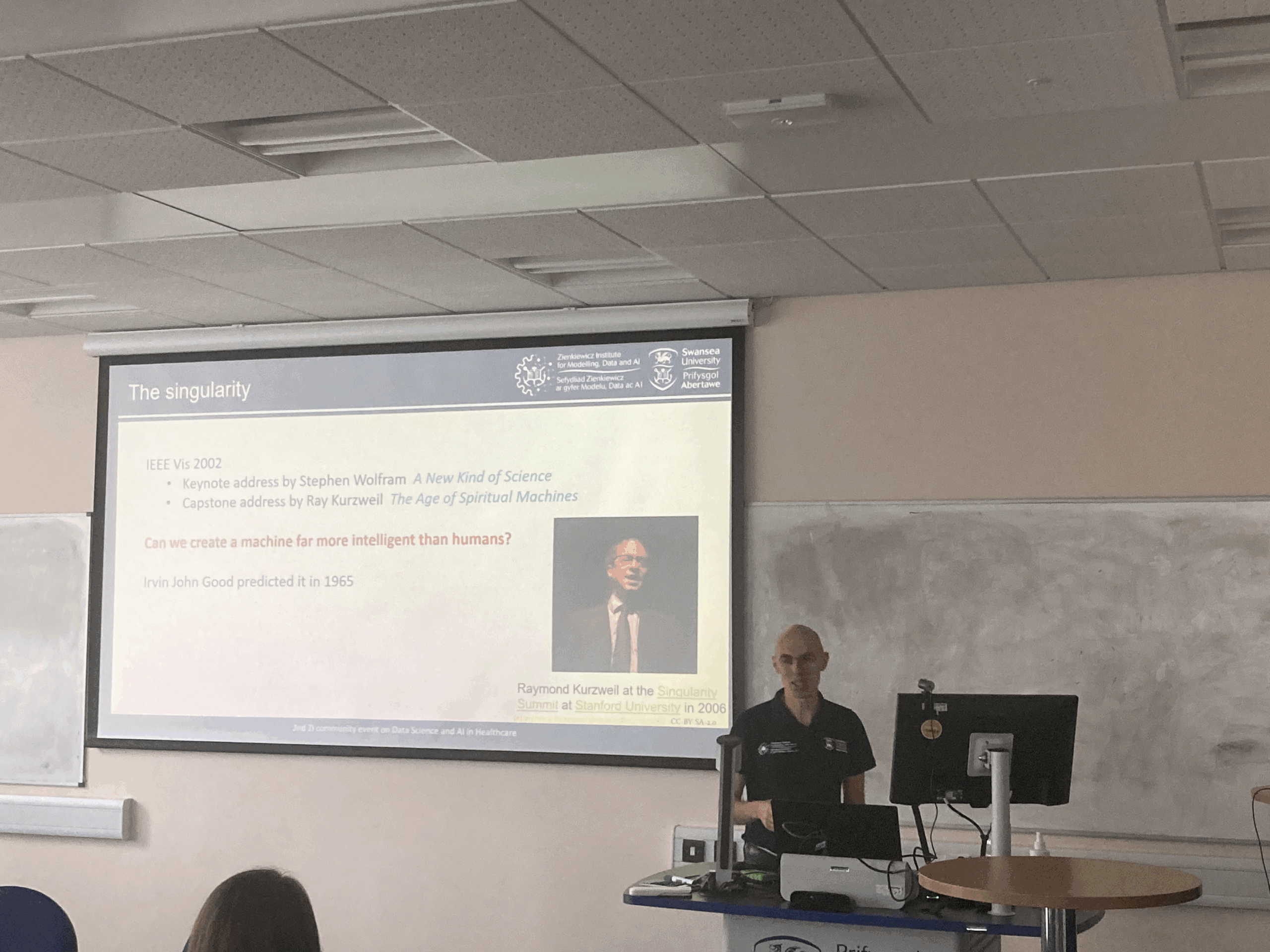
2nd ZI Community event on AI and Data Science for Healthcare
Speaker: Time: 9am, 5th June 2025 Location/Room: Wallace 218 The ZI has hosted a collaborative event aimed at Swansea-based researchers (and others) who are interested in advancing healthcare research through Data, Modelling and AI.
-
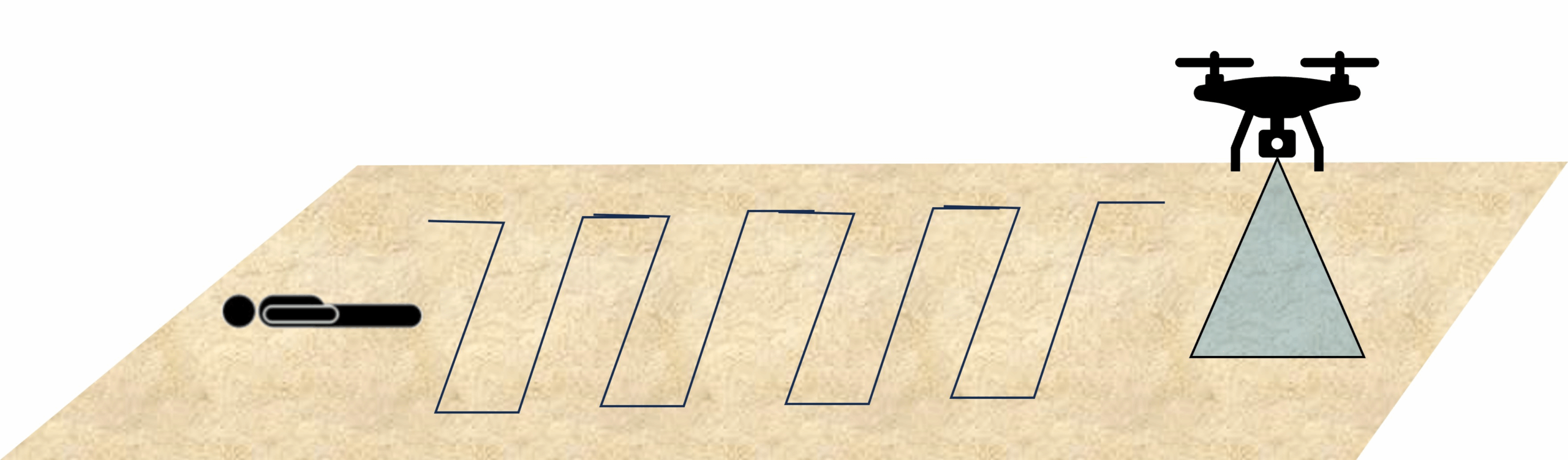
The development of an autonomous drone swarm for rescue missions in desert
Project Overview The research focuses on the development of an autonomous drone swarm for search and rescue missions in desert environments by incorporates advanced algorithms for image recognition and autonomous navigation, alongside field testing and data analysis. By evaluating the system’s performance in both simulated and real-world settings, the aims to create a reliable and…
-
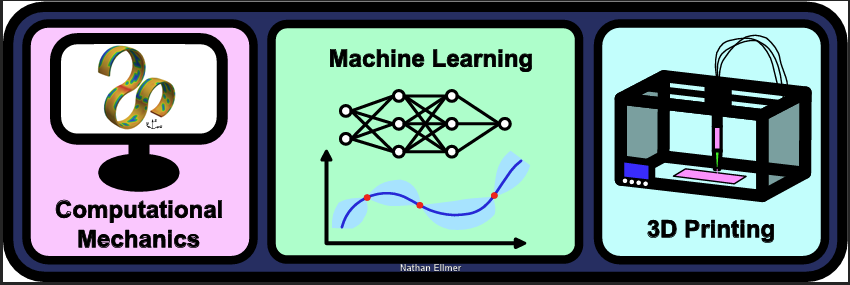
In-silico Framework for the Design, Characterisation and Topology Optimisation of Electroactive Polymers for Soft Robotics
Project Overview This PhD project focuses on the development of advanced Machine Learning (ML) techniques to generate accurate and efficient constitutive models for complex smart materials – particularly Electroactive Polymers (EAPs). Traditional modelling approaches for such materials often rely on computationally intensive homogenisation schemes within Finite Element Methods (FEM), which can limit their practicality for…
