
Project Overview
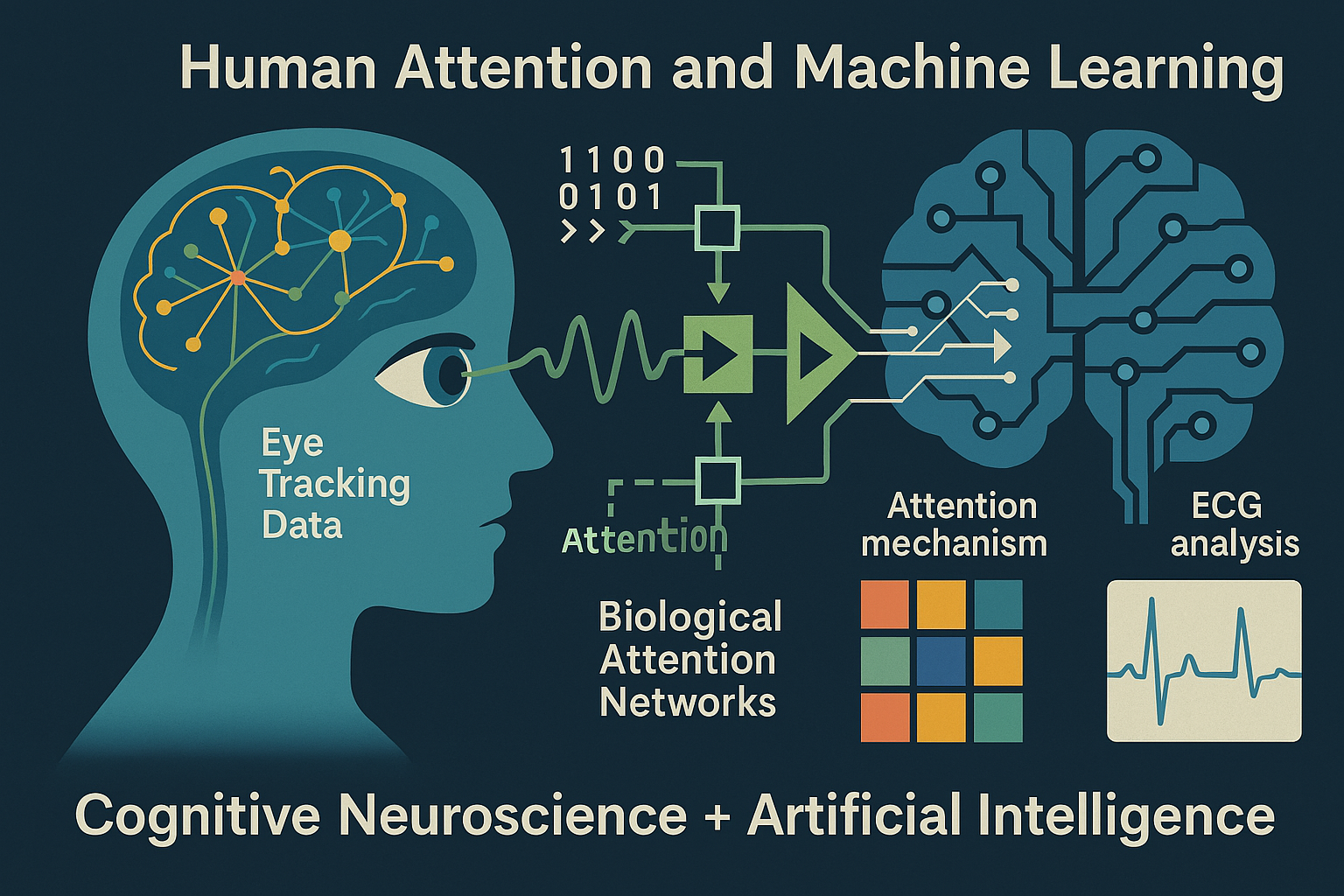
The addition of ‘attention’ to machine learning has recently improved many algorithms with the potential to transform a wide range of machine learning approaches (transformers, perceivers). Attention, simply, allows an algorithm to allocate more weight to input that is relevant for certain tasks, and less weight to the irrelevant. We propose that attention mechanisms in machine learning will become increasingly important as the volume of input data increases, and even efficient algorithms will have to make informed choices about which input should receive priority or actively inhibited. We will apply current theories of human attention to improve machine learning algorithms that adjust to the goals of the agent. Biological attention has been studied for more than 100 years and comprises multiple overlapping networks that help an organism allocate neural processing to sensory input that is important to a given task. For example, the orienting network uses eye movements and shifts of spatial attention to inspect important areas of our environment. The executive control network adjusts sensory priority for our evolving goals. We will use high quality eye tracking data in various tasks as a proxy for human attention and use these data to inform novel attentional mechanisms for machine learning.
Project Aims
- Develop advanced machine learning attention mechanisms inspired by principles of human attention.
- Utilise eye tracking as a proxy for human attention to inform novel computational models.
- Investigate how biological attention networks can enhance the prioritisation and selection of relevant data in machine learning algorithms.
- Apply and evaluate these improved attention mechanisms in the context of large and complex datasets, particularly in domains such as Vision Transformers (ViT) and electrocardiogram (ECG) analysis.
- Bridge insights from cognitive neuroscience and artificial intelligence to create adaptable, efficient algorithms that dynamically focus on task-relevant information.
Period: 2022 – 2026
Project Team
Collaborators
Swansea University